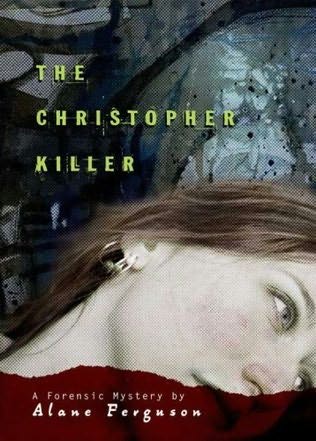
 If you like CSI and other forensic mystery TV shows and movies, you should enjoy The Christopher Killer, by Alane Ferguson. Cassie is a high school student whose father is the town's coroner (the guy who picks up dead bodies and then, if necessary, performs an autopsy to find out cause of death). Cassie wants to be a forensic scientist, so she is always reading about how the police use clues from murder scenes to catch the killers. In the beginning of the novel, Cassie's father is beginning to get swamped at work, so he asks Cassie to be his assistant, much to her delight. She struggles a bit with her first dead body, but is interested in the work and enjoys using what she's learned from her extracurricular studying. She and the town are shocked to the core, however, when one of her high school friends is found dead in the woods. It's determined that the girl is the latest victim of the Christopher Killer, a serial killer who has been murdering girls across the country, always placing a small St. Christopher medallion somewhere on their bodies. Can Cassie get beyond her personal grief and help avenge the death of her friend by finding the killer, without becoming a victim herself? I liked this book a lot because of Cassie's strength as the protagonist, and for its combination of science, suspense, and teenage relationships and friendships. I was also pretty satisfied with the ending. 3 1/2 out of 4 Bananas!
Wednesday, April 15, 2009
CSI for the High School Set
If you like CSI and other forensic mystery TV shows and movies, you should enjoy The Christopher Killer, by Alane Ferguson. Cassie is a high school student whose father is the town's coroner (the guy who picks up dead bodies and then, if necessary, performs an autopsy to find out cause of death). Cassie wants to be a forensic scientist, so she is always reading about how the police use clues from murder scenes to catch the killers. In the beginning of the novel, Cassie's father is beginning to get swamped at work, so he asks Cassie to be his assistant, much to her delight. She struggles a bit with her first dead body, but is interested in the work and enjoys using what she's learned from her extracurricular studying. She and the town are shocked to the core, however, when one of her high school friends is found dead in the woods. It's determined that the girl is the latest victim of the Christopher Killer, a serial killer who has been murdering girls across the country, always placing a small St. Christopher medallion somewhere on their bodies. Can Cassie get beyond her personal grief and help avenge the death of her friend by finding the killer, without becoming a victim herself? I liked this book a lot because of Cassie's strength as the protagonist, and for its combination of science, suspense, and teenage relationships and friendships. I was also pretty satisfied with the ending. 3 1/2 out of 4 Bananas!

Friday, April 3, 2009
What is Moral Responsibility?
 I read The Reader by German author Bernhard Schlink while I was in Mexico during Spring Break. It's not exactly a vacation read, but I enjoyed it all the same. It's a very different sort of book from what I've been reading lately, which have mostly been mysteries and thrillers (love those!). Since Kate Winslet won an Oscar for her role as Hannah Schmitz in the movie version of The Reader, though, I thought that this novel translated from the German was worth a look. It's the story of Michael Berg, a teenage boy in the years following World War II, who begins an affair with an older woman (Hannah Schmitz, the Kate Winslet role). The affair is very erotic and exciting, but soon begins to have a dark side when Hannah avoids questions about her past and shows some troubling sides to her personality. And then, one day, she is gone. Michael does not see her again for years, after he has been married, had a child, and then divorced. The circumstances in which he sees Hannah again force Michael himself as well as the reader to ask certain moral questions about the nature of responsibility, guilt, redemption and forgiveness. These questions are not easy to answer, particularly when dealing with a subject like the Holocaust, which is the time period after which The Reader takes place. I liked this book and felt that it was an important read because it filled a gap in my own consciousness and provided food for my own thought and personal moral development. It's not a technically difficult book to read, as it is fairly slim and straightforward, but the themes are certainly sophisticated and require a patient, thoughtful mind. 3 1/2 out of 4 Bananas.
Wednesday, April 1, 2009
Inexcusable's Main Character is, well, Inexcusable
 Have you read Speak by Laurie Halse Anderson? If you did, and loved it, then you should give Chris Lynch's Inexcusable a try. This is a gripping, fast-paced novel from the viewpoint of an unreliable, potentially unstable, narrator. Keir Sarafian is a good guy, everybody says so. So, if he's such a stand-up, admirable person, it's impossible that he would rape a girl that he's totally in love with...right? That's what Keir is trying to convince the reader of during the course of this novel, which opens with a scene where the girl, Gigi, is screaming, crying, and accusing him of raping her. Now I would say that usually in a novel, the reader likes or identifies with the main character or narrator. In Inexcusable, however, I never felt comfortable with Keir. I was always on edge with him, and was suspicious of what he was telling me. Were my suspicions justified? Is Keir really who he thinks he is, or is there a dark side to him? I loved this book, partly because I was uncomfortable while I was reading it, and also because it was fun to question the truthfulness of the narrator. 4 out of 4 Bananas!
Abraham Lincoln Illinois High School Book Award 2010 Nominee
Tuesday, March 17, 2009
Murdery Mystery: What a Genre!
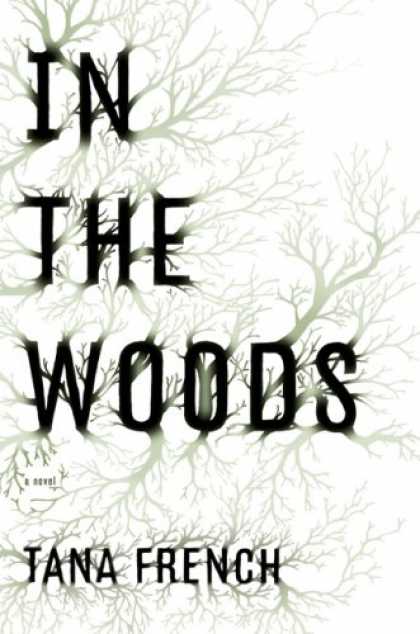 I love murder mysteries. What I loved about In the Woods by Tana French is that it is a shining example of what mass market murder mysteries could be if only the writing were good, or at least if it resembled something bordering on the literary. Don't get me wrong, I enjoy Patricia Cornwell and Mary Higgins Clark as much as the next person, but they verge more on brain candy than on literary B vitamins. In the Woods, however, is more literary fiction than airport bookstore. It is told from the point of view of Detective Ryan, a detective on Ireland's Murder Squad, who with his partner is investigating the murder of a twelve year old girl. The girl is found dead on an archaeological site outside of Ryan's hometown, which is also the site of the disappearance twenty years earlier of two other children. The twist is that Detective Ryan is the one child who was found when the other children had vanished. He was found with his arms wrapped around a tree, blood filling his shoes. In the Woods is thrilling, suspenseful, and a true page-turner (I had to force myself to put it down and turn off my light every night). However. Mass market murder mysteries always have a satisfying ending, right? If you read In the Woods, just remember that this is no mass market murder mystery. And that's all I'm going to say about that. 3 1/2 out of 4 Bananas!
Monday, March 2, 2009
Great Read About a Terrible Topic
 Such a Pretty Girl by Laura Wiess recently won second place in the 2009 Abraham Lincoln Illinois High School Book Award contest. It is the story of Meredith, a fourteen year old girl who was repeatedly raped by her father until he injured her so badly that she had to go to the hospital. Her father was arrested, imprisoned, but was released after having served only three years. The book begins with Meredith's father returning to her life, much to the delight of her mother, who is desperate to hold onto her marriage, even though she knows what he did to Meredith. Incest is a very difficult topic to stomach, even in fiction, but Wiess handles it with an appropriate amount of honesty, outrage, and just enough details to make it wrenching without being too graphic. On her official website, Wiess comments on writing Such a Pretty Girl, and how she extensively researched incest's effects on victims, the way incest crimes are prosecuted, and case studies of various perpetrators of incest. She felt so outraged by what she found that she felt compelled to write this novel so that people could have some sense of what the victims go through. The ending was a little strange for me, but because it is a short, well-written book with a lot of impact, I'm giving it 3 1/2 out of 4 Bananas.
Monday, February 23, 2009
Teenagers Fighting to the Death, Survivor-Style? Cool!
 I just finished reading The Hunger Games by Suzanne Collins and am already picturing which Hollywood starlet might be cast as Katniss, the novel's spunky heroine who must fight to the death in order to win the Capitol's annual Hunger Games. A Hollywood version of this action-packed Thunderdome for the under-18 set is inevitable, so I'll just have to hope that they get it right. The Hunger Games takes place in a future world, where Armageddon has essentially befallen the United States, and the Capitol is located somewhere west of the Rockies. The country has been divided into twelve districts, which at some point in the past rose up together in a revolt against the Capitol. The Capitol won, however, and as a punishment and warning to the Districts, it holds the Hunger Games, to which each District must send two "tributes." The tributes must fight to the death in order to win the Hunger Games, which are held in a specially-designed arena controlled by the Capitol's gamemakers, who can control the weather, introduce enraged mutant animals, and even hurl fireballs at contestants if things have gotten too calm for the viewing audience. Twisted, yes. Good? For sure! Katniss and Peeta are sent as the tributes from District 12, long known as the weakest and least successful district in Games history. They work together to try and survive, even though there can be only one true winner. The Hunger Games would appeal to anyone and everyone, I think because there it's got a little of everything: action, suspense, a teeny bit of gore, a pinch of romance, and plenty of twists to keep things interesting. I didn't love it, but I really liked it, so I'm giving The Hunger Games 3 out of 4 Bananas!
Friday, February 6, 2009
Riding the Bus With My Sister: What does it mean to have mental retardation?
 On this year's Illinois Read for a Lifetime list, Riding the Bus With My Sister by Rachel Simon is an inspirational, heartfelt, and brutally honest look at the joys and the pain of one sister reconnecting with another. Rachel Simon is an academic who buries herself in her work and has little time for other people. Her sister, Beth, has mental retardation and spends most of her days riding the buses in Philadelphia, where she lives independently. Rachel and Beth's family has always agonized over Beth and the role that the family should play in her life. They want her to get a job and become a productive member of society, which is something it seems she could certainly do, that is, if that's what she wanted to do. Beth's greatest desire in life is independence to do what she wants, and what she wants to do is ride the buses. While riding, she befriends the drivers and counts on them as friends, confidantes, advisors and, in some cases, objects of affection. Her fixation with the buses and drivers exasperates and embarrasses her family, however, and Rachel finds it easiest to immerse herself in her own life in order to aviod having to visit Beth and be confronted with her lifestyle. The book begins with Rachel finally feeling guilty enough to pay a visit and ride the buses for an afternoon with Beth. By the end of the day, Rachel has agreed to ride the buses with Beth for a year. The rest of the book follows Rachel's journey with her sister, her burgeoning familiarity with the ins and outs of mental retardation, and her growing familiarity with and respect for the labrynth of issues surrounding care and support of people with disabilities. Riding the Bus With My Sister does not disappoint because it does not fall back on the trite notion that people with mental retardation are "God's true angels" (a sentiment which frustrates Rachel) or that they are sweet, happy people who, like children, have no adult hopes or desires. Also, at times Beth can be rude, obnoxious, and self-centered, which challenges Rachel to deal with her feelings of anger toward her sister. I recommend Riding the Bus With My Sister to all readers because of its honesty, its inspiring look at independence, and its examination of what unconditional love can really mean: 4 out of 4 Bananas!
Subscribe to:
Posts (Atom)